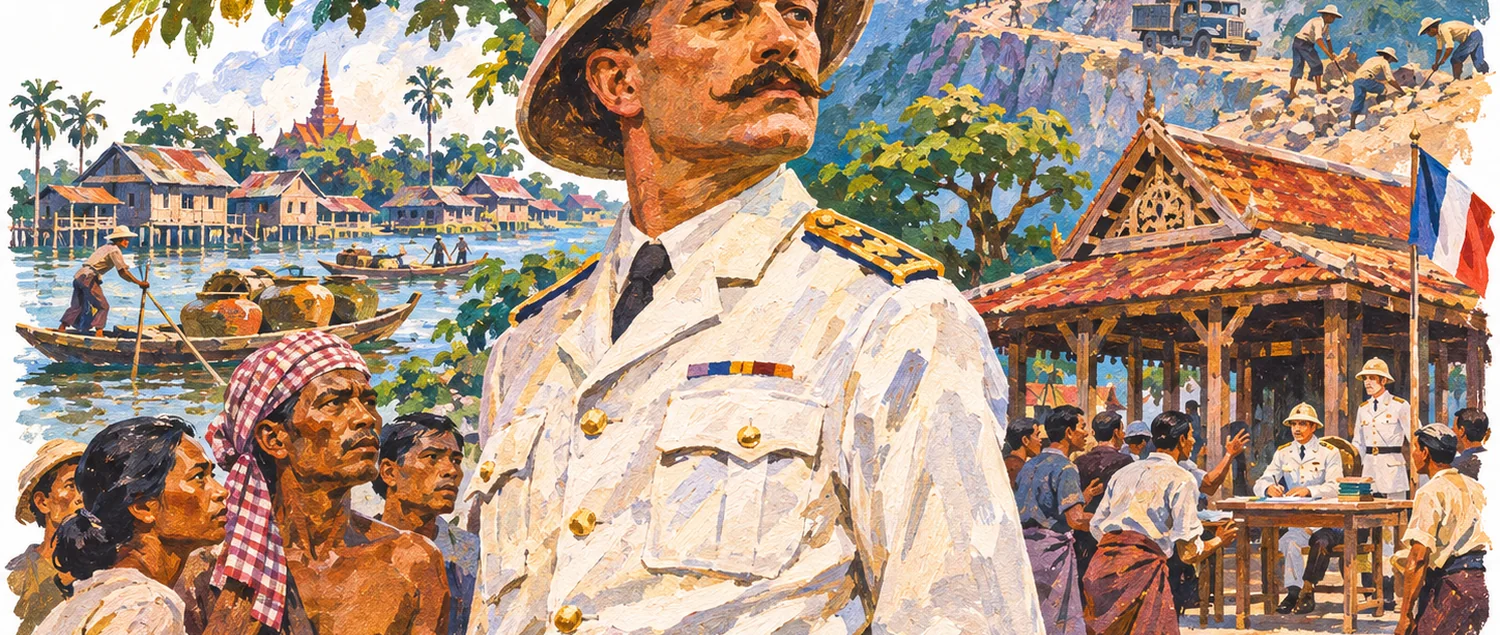
A Colonial Administrator
In the early twentieth century, Cambodia was governed as a French protectorate. Its colonial administration relied heavily on taxes collected from ordinary families, particularly the people who grew rice.
Félix Louis Bardez was born in Paris in 1882. He joined the colonial service in 1907 and arrived in French Indochina the following year. His career took him through Cochinchina and Cambodia; he also served in the French army during the First World War.
By 1923, Bardez was acting French résident in Prey Veng. His superiors viewed him as determined and effective. He believed that weak collection procedures and local officials were allowing too much tax revenue to go uncollected. His reports showed that he could bring in more money by intervening personally.
That reputation earned him a transfer in November 1924 to Kampong Chhnang, a province where the administration wanted tighter financial control. To his superiors, Bardez looked like a man who could get results. To villagers struggling to find cash, his methods could feel very different.
The Burden of Taxes
The conflict at the heart of the Bardez affair was not simply about one official. It was about a rural population facing a demanding colonial tax system.
Rice cultivators paid taxes linked to their harvests and land, while other obligations fell on fishermen, merchants, and households. New assessments introduced in late 1924 added to existing pressure. Tax revenues also helped fund colonial public works and expensive developments, including the hill-station at Bokor.
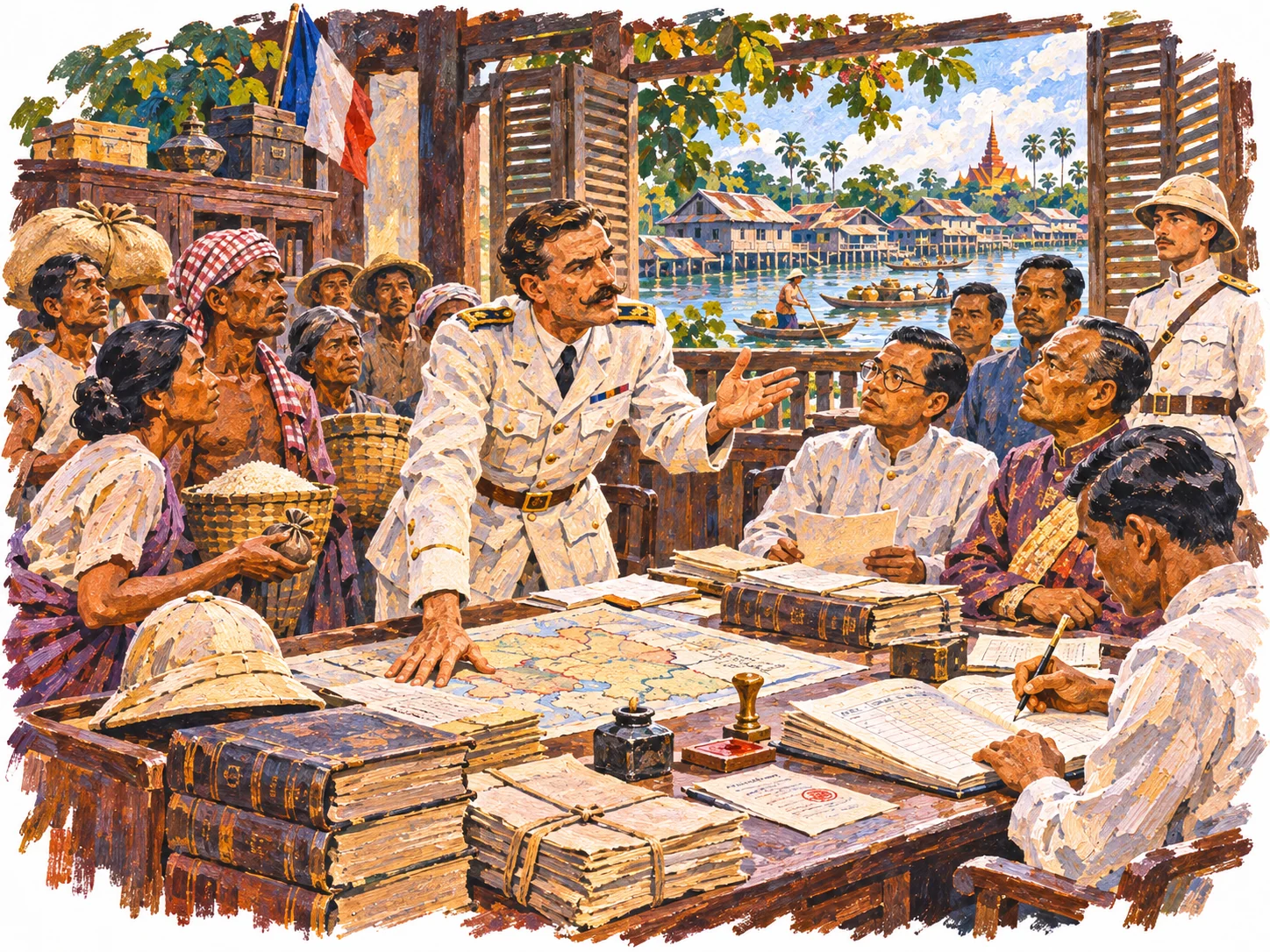
In January 1925, approximately a hundred peasants reportedly came to Bardez in Kampong Chhnang to complain that their taxes were too heavy and they had no cash. He gave them more time to pay. Tensions remained, however, and a Cambodian tax collector was beaten during another confrontation in the area.
As Khmer New Year approached, the French administration still wanted overdue payments. Bardez decided—or may have been directed—to make a personal tour of the villages. One of those stops would be Kraang Laev, also written Krang Laav or Krang Leav.
A Visit to Kraang Laev
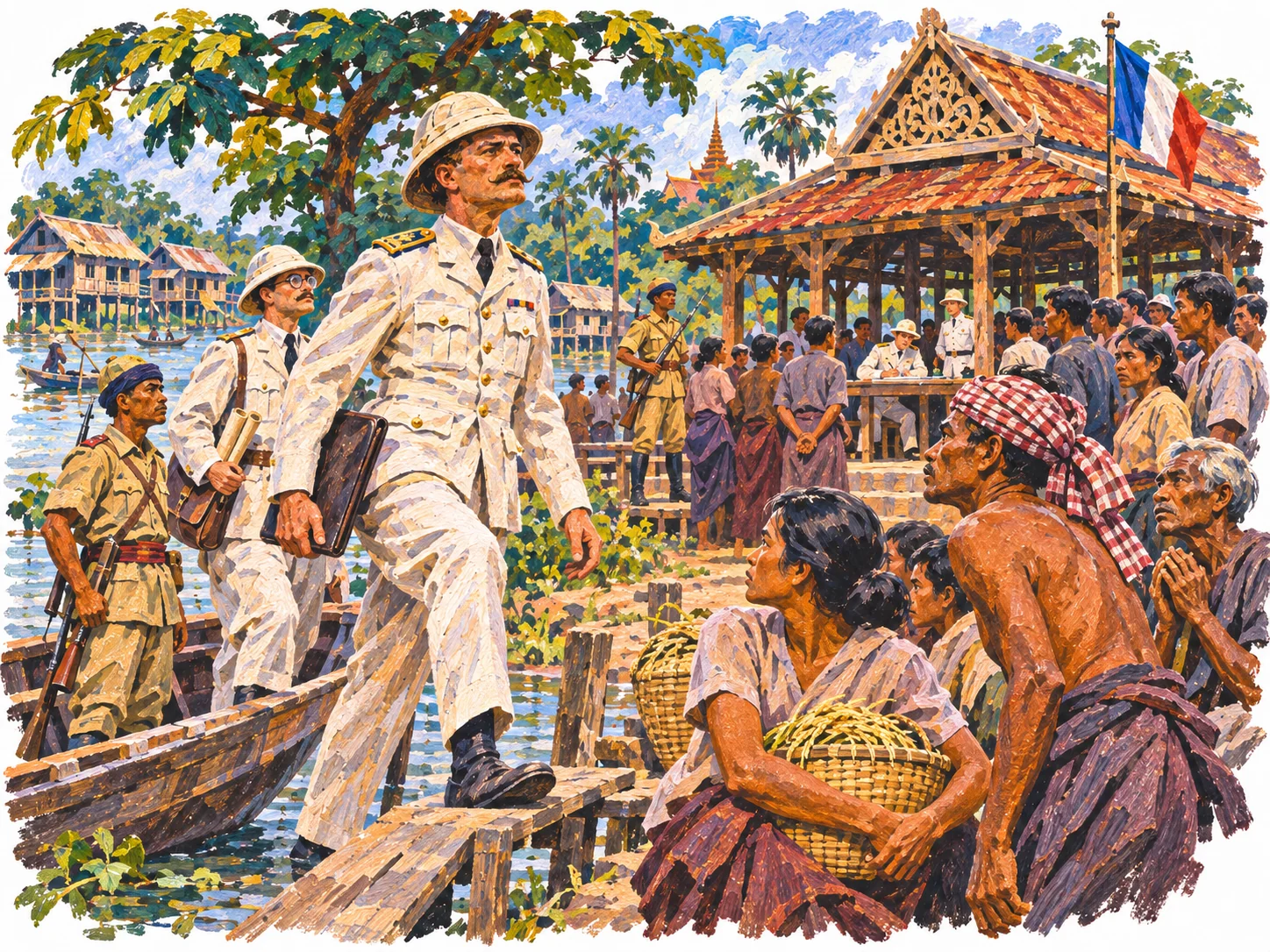
On the morning of Saturday, 18 April 1925, Bardez arrived at Kraang Laev, a village about fourteen kilometres from Kampong Chhnang town. It was the holiday period, and a large crowd had gathered.
He came with a Cambodian interpreter, a militiaman, and a cook. Local elders and villagers assembled near the sala, the open-sided communal hall close to the pagoda. The village headman and the abbot explained that people simply did not have the money to settle their arrears.
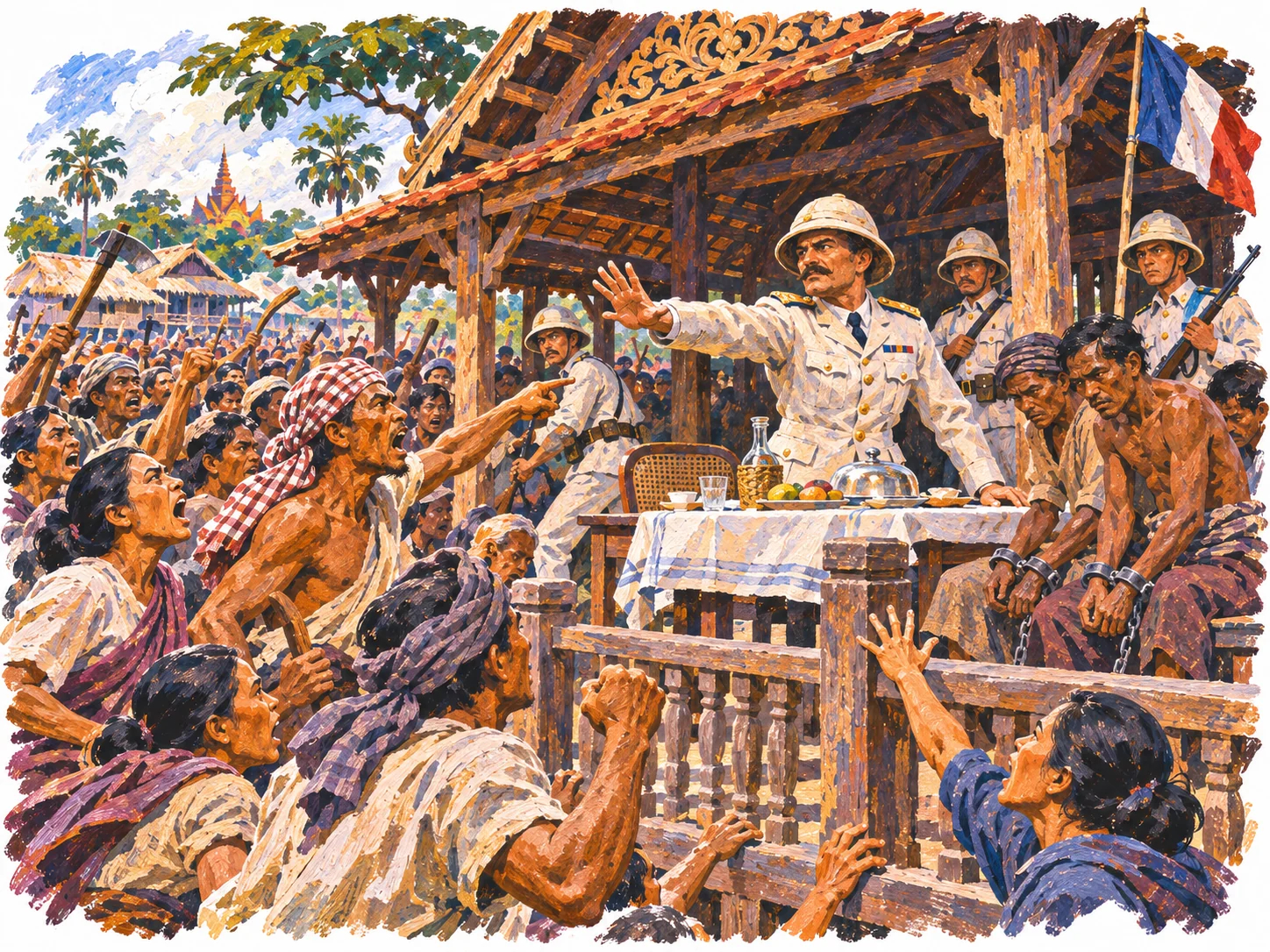
According to historian David Chandler’s reconstruction of court records and eyewitness testimony, Bardez ordered three men to be restrained as hostages until the village's unpaid taxes were collected. He also sent for reinforcements from Kampong Chhnang.
By midday, the restrained men were still being held. A woman approached with money borrowed to pay her husband's tax and asked for his release so he could eat. Accounts differ over Bardez's exact words, but agree that the men were not freed. The growing frustration was reaching its breaking point.
The Day Turned Violent
What followed was sudden, chaotic and deadly. A dispute around the detained men escalated into a fight between the crowd and the colonial party.
One participant, Sok Bith, later recalled a confrontation involving the militiaman's rifle. His recollection was recorded more than fifty years after the event and, like testimony from the 1925 trial, must be read with care. Nonetheless, contemporary records agree on the outcome: Bardez, his Cambodian interpreter and the Cambodian militiaman were all killed.
After the killings, a large group of villagers set off toward Kampong Chhnang, apparently hoping to protest or demand relief from the taxes. Some accounts estimate the crowd at around seven hundred, while others give higher figures. The march broke up or was dispersed by militia before reaching town.
The deaths shocked French officials in Phnom Penh. A high-ranking administrator had been killed while carrying out official duties—an incident that colonial leaders feared might encourage wider resistance.
Trial and Collective Punishment
The response did not stop with arrests. The name, reputation and daily life of the village itself became targets of official punishment.
French and Cambodian authorities moved rapidly. More than two hundred villagers were questioned in the aftermath. Nineteen men were eventually held as suspects; one died before trial. In December 1925, the remaining eighteen were tried in Phnom Penh.
Their lawyers argued that the killings should be understood as a collective reaction to crushing economic pressure. Colonial prosecutors, by contrast, sought to cast the perpetrators as criminals rather than political protesters. Historian David Chandler records sentences of one death penalty, four life terms, three fifteen-year terms and one five-year term; nine defendants were released.
Even before the trial, a royal decree had renamed Kraang Laev as Direchhan, meaning roughly “bestial”. It also required the villagers to perform Buddhist ceremonies of atonement on the anniversary of the killings for ten years.
The punishment carried a message well beyond the courtroom: the actions of some were officially made a mark upon the entire community.
A Memorial and a Memory
The Bardez affair left behind two very different kinds of monument: one built of stone, the other carried in the memories of villagers.
A memorial stupa near the site remembers the French administrator who died in 1925. But the imposed village name and the collective disgrace attached to it proved painful for later generations. In interviews published decades afterward, residents recalled being mocked for coming from the so-called “bestial village.”
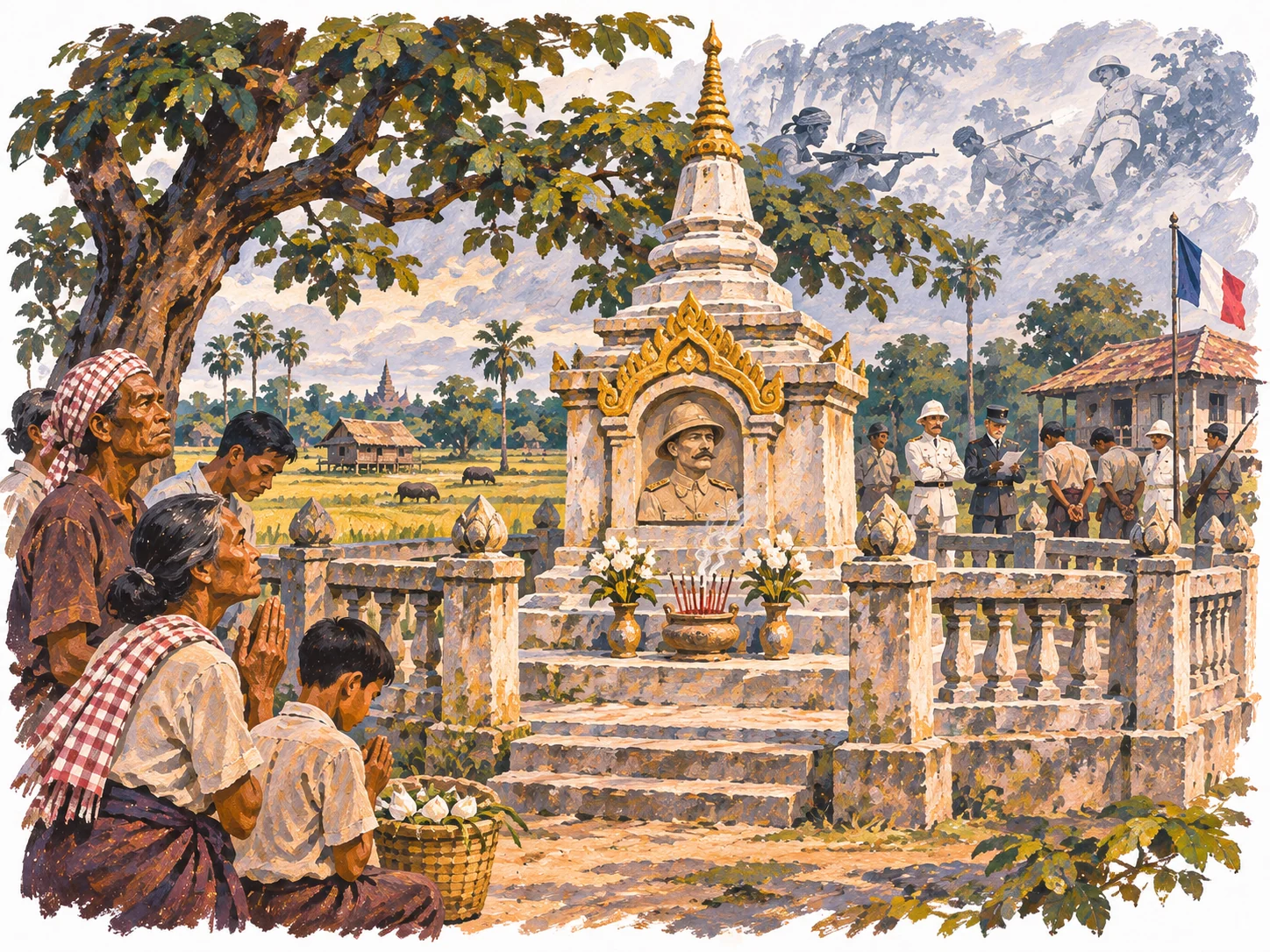
How should the events be remembered? Some later nationalist accounts celebrated the villagers as early anti-colonial resisters. Others focused on the three killings. Chandler cautioned that many such interpretations were imposed after 1925, and that the original confrontation may have been spontaneous rather than a planned political uprising.
There is no need to erase either side of the story. Three people died violently. At the same time, the colonial tax system placed severe burdens on rural Cambodians, and the punishment of an entire village lasted far beyond the original crime.
More than a century later, the affair remains a remarkable chapter of Cambodian history: a reminder that seemingly small places can become the stage for extraordinary events—and that the meaning of an event can change with each generation that tells its story.
A note on the historical record
This story is based chiefly on historian David P. Chandler's research, including his reading of colonial documents, 1925 trial testimony and an interview with participant Sok Bith. Accounts differ on the precise trigger of the violence, the number of people in the crowd and how the affair should be interpreted. The illustrations are modern imaginative reconstructions; no claim is made that they depict Bardez's actual appearance or specific eyewitness scenes.
Further Reading & Sources
For readers who want to go beyond the illustrated story, these sources trace the incident and its lasting impact from historical scholarship and Cambodian journalism.
- The Assassination of Resident Bardez (1925): A Premonition of Revolt in Colonial Cambodia — David P. Chandler, Journal of the Siam Society (1982).
- A History of Cambodia — David P. Chandler, chapter on Cambodia's response to France, 1916–1945.
- Nearly a century after the bloody murder of a French colonial official, a village still bears the mark of the “beast” — report originally published by The Phnom Penh Post (2018).
- Revisiting History — The Cambodia Daily (2004).